

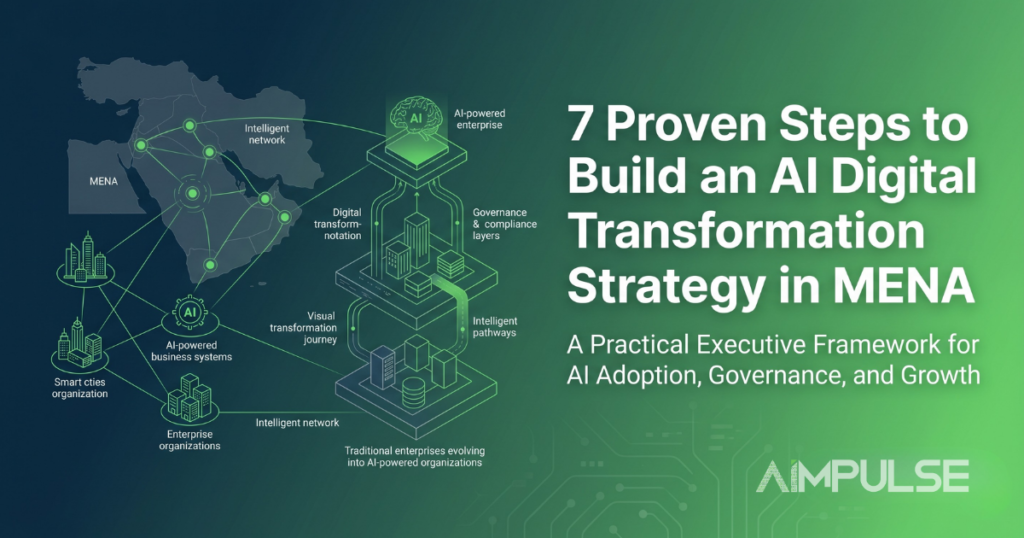
7 Proven Steps to Build an AI Digital Transformation in MENA
What Is AI Digital Transformation?
AI digital transformation is the process of using artificial intelligence and automation technologies to redesign business operations, improve decision-making, and create new value.
Unlike traditional digital transformation, AI introduces:
- Predictive capabilities
- Intelligent automation
- Real-time insights
- Adaptive decision-making
Successful transformation combines technology implementation with organizational change.
Why AI Transformation in MENA Matters
Several factors are accelerating AI adoption across the region:
Government Initiatives
Programs such as:
- Saudi Vision 2030
- UAE Digital Government Strategy
- Qatar National Vision 2030
- 7 Proven Steps to Build an AI Digital Transformation in MENA
- 7 Proven Steps to Build an AI Digital Transformation in MENA
- 7 Proven Steps to Build an AI Digital Transformation in MENA
7 Proven Steps to Build an AI Digital Transformation in MENA
7 Proven Steps to Build an AI Digital Transformation in MENA
7 Proven Steps to Build an AI Digital Transformation in MENA
Software Development Company
Software Development Company
- 7 Proven Steps to Build an AI Digital Transformation in MENA
- 7 Proven Steps to Build an AI Digital Transformation in MENA
- 7 Proven Steps to Build an AI Digital Transformation in MENA
- 7 Proven Steps to Build an AI Digital Transformation in MENA
are encouraging organizations to modernize operations.
Growing Competition
Businesses must improve efficiency while delivering better customer experiences.
Increasing Data
7 Proven Steps to Build an AI Digital Transformation in MENA
7 Proven Steps to Build an AI Digital Transformation in MENA
7 Proven Steps to Build an AI Digital Transformation in MENA
7 Proven Steps to Build an AI Digital Transformation in MENA
7 Proven Steps to Build an AI Digital Transformation in MENA
7 Proven Steps to Build an AI Digital Transformation in MENA
7 Proven Steps to Build an AI Digital Transformation in MENA
7 Proven Steps to Build an AI Digital Transformation in MENA
7 Proven Steps to Build an AI Digital Transformation in MENA
Availability
Organizations now have access to more operational and customer data than ever before.
AI turns that data into actionable intelligence.
7 Proven Steps to Build an AI Digital Transformation Strategy
Step 1: Define Business Objectives
Technology should support business goals.
Identify measurable objectives such as:
- Reducing operational costs
- Improving customer satisfaction
- Increasing productivity
- Accelerating growth
Successful AI initiatives begin with clear business outcomes.
Step 2: Assess Digital Readiness
Evaluate:
- Existing systems
- Data quality
- Infrastructure
- Internal capabilities
A readiness assessment reveals opportunities and risks before implementation begins.
Step 3: Prioritize High-Impact Use Cases
Focus on projects that offer measurable ROI.
Examples include:
- Customer service automation
- Demand forecasting
- Predictive maintenance
- Intelligent document processing
Quick wins help build momentum.
Step 4: Build a Strong Data Foundation
AI depends on quality data.
Organizations should establish:
- Data governance
- Security controls
- Data quality standards
- Integration strategies
Without reliable data, AI performance suffers.
Step 5: Implement AI Responsibly
Organizations should consider:
- Compliance requirements
- Explainability
- Security
- Ethical considerations
Responsible AI builds trust and reduces risk.
Step 6: Upskill Your Workforce
Technology alone does not create transformation.
Employees need:
- AI literacy
- Process knowledge
- Change management support
Successful organizations invest in people alongside technology.
Step 7: Measure and Scale
Track KPIs such as:
- Cost reduction
- Productivity gains
- Customer satisfaction
- Revenue impact
Once value is proven, scale AI across additional departments.
Industry Use Cases Across MENA
Logistics
- Route optimization
- Predictive maintenance
- Warehouse automation
Government
- Citizen services
- Smart city initiatives
- Digital service delivery
Financial Services
- Fraud detection
- Risk assessment
- Customer onboarding
Healthcare
- Clinical decision support
- Medical imaging analysis
- Patient experience improvements
How to Implement AI Digital Transformation in the Middle East
A practical roadmap includes:
- Assess current capabilities
- Identify opportunities
- Launch pilot projects
- Measure results
- Scale successful initiatives
Many organizations delay transformation because they try to solve everything at once.
The most successful AI programs start with one high-impact business challenge, validate ROI, and then scale systematically across the organization.

Common Mistakes to Avoid
Avoid:
- Starting without a strategy
- Ignoring change management
- Focusing only on technology
- Poor data quality
- Lack of executive sponsorship
These mistakes are responsible for many failed transformation initiatives.
The AImpulse AI Transformation Framework
Discover
Identify opportunities and challenges.
Prioritize
Select high-value AI initiatives.
Build
Develop secure and scalable solutions.
Integrate
Connect AI into existing workflows.
Scale
Expand successful implementations across the organization.
This framework helps organizations achieve measurable outcomes while minimizing risk.

How AImpulse Helps
We help organizations across the GCC and MENA region:
- Build AI transformation roadmaps
- Identify high-value AI opportunities
- Develop secure AI solutions
- Automate business processes
- Scale AI adoption successfully
Our approach combines strategy, technology, and implementation expertise to deliver real business value.
If you’re exploring AI adoption across industries, you may also find our guide on AI Governance in MENA useful for understanding the broader landscape.
Frequently Asked Questions
What is AI digital transformation?
AI digital transformation is the use of artificial intelligence technologies to improve business processes, decision-making, customer experiences, and operational efficiency.
Why is AI digital transformation important in MENA?
Organizations across the GCC face increasing pressure to improve efficiency, accelerate innovation, and support national digital transformation initiatives.
How can companies start AI transformation?
Most organizations begin with an AI readiness assessment followed by a pilot project focused on a specific business challenge.
What industries benefit most from AI transformation?
Logistics, government, healthcare, finance, manufacturing, and retail are among the industries seeing significant value from AI adoption.
Conclusion
AI digital transformation MENA is no longer a future initiative—it’s a present business requirement.
Organizations that align AI with strategy, governance, and measurable outcomes will gain a significant competitive advantage across the GCC and wider Middle East.
The key is not adopting AI everywhere.
The key is adopting AI where it creates the greatest business impact.
Ready to accelerate your transformation journey? AImpulse can help you identify, prioritize, and implement AI initiatives that deliver measurable results.
What Is AI Digital Transformation?
AI digital transformation is the process of using artificial intelligence and automation technologies to redesign business operations, improve decision-making, and create new value.
Unlike traditional digital transformation, AI introduces:
- Predictive capabilities
- Intelligent automation
- Real-time insights
- Adaptive decision-making
Successful transformation combines technology implementation with organizational change.
Why AI Transformation in MENA Matters
Several factors are accelerating AI adoption across the region:
Government Initiatives
Programs such as:
- Saudi Vision 2030
- UAE Digital Government Strategy
- Qatar National Vision 2030
are encouraging organizations to modernize operations.
Growing Competition
Businesses must improve efficiency while delivering better customer experiences.
Increasing Data Availability
Organizations now have access to more operational and customer data than ever before.
AI turns that data into actionable intelligence.
7 Proven Steps to Build an AI Digital Transformation Strategy
Step 1: Define Business Objectives
Technology should support business goals.
Identify measurable objectives such as:
- Reducing operational costs
- Improving customer satisfaction
- Increasing productivity
- Accelerating growth
Successful AI initiatives begin with clear business outcomes.
Step 2: Assess Digital Readiness
Evaluate:
- Existing systems
- Data quality
- Infrastructure
- Internal capabilities
A readiness assessment reveals opportunities and risks before implementation begins.
Step 3: Prioritize High-Impact Use Cases
Focus on projects that offer measurable ROI.
Examples include:
- Customer service automation
- Demand forecasting
- Predictive maintenance
- Intelligent document processing
Quick wins help build momentum.
Step 4: Build a Strong Data Foundation
AI depends on quality data.
Organizations should establish:
- Data governance
- Security controls
- Data quality standards
- Integration strategies
Without reliable data, AI performance suffers.
Step 5: Implement AI Responsibly
Organizations should consider:
- Compliance requirements
- Explainability
- Security
- Ethical considerations
Responsible AI builds trust and reduces risk.
Step 6: Upskill Your Workforce
Technology alone does not create transformation.
Employees need:
- AI literacy
- Process knowledge
- Change management support
Successful organizations invest in people alongside technology.
Step 7: Measure and Scale
Track KPIs such as:
- Cost reduction
- Productivity gains
- Customer satisfaction
- Revenue impact
Once value is proven, scale AI across additional departments.
Industry Use Cases Across MENA
Logistics
- Route optimization
- Predictive maintenance
- Warehouse automation
Government
- Citizen services
- Smart city initiatives
- Digital service delivery
Financial Services
- Fraud detection
- Risk assessment
- Customer onboarding
Healthcare
- Clinical decision support
- Medical imaging analysis
- Patient experience improvements
How to Implement AI Digital Transformation in the Middle East
A practical roadmap includes:
- Assess current capabilities
- Identify opportunities
- Launch pilot projects
- Measure results
- Scale successful initiatives
Many organizations delay transformation because they try to solve everything at once.
The most successful AI programs start with one high-impact business challenge, validate ROI, and then scale systematically across the organization.
Common Mistakes to Avoid
Avoid:
- Starting without a strategy
- Ignoring change management
- Focusing only on technology
- Poor data quality
- Lack of executive sponsorship
These mistakes are responsible for many failed transformation initiatives.
The AImpulse AI Transformation Framework
Discover
Identify opportunities and challenges.
Prioritize
Select high-value AI initiatives.
Build
Develop secure and scalable solutions.
Integrate
Connect AI into existing workflows.
Scale
Expand successful implementations across the organization.
This framework helps organizations achieve measurable outcomes while minimizing risk.
How AImpulse Helps
We help organizations across the GCC and MENA region:
- Build AI transformation roadmaps
- Identify high-value AI opportunities
- Develop secure AI solutions
- Automate business processes
- Scale AI adoption successfully
Our approach combines strategy, technology, and implementation expertise to deliver real business value.
If you’re exploring AI adoption across industries, you may also find our guide on AI Governance in MENA useful for understanding the broader landscape.
Frequently Asked Questions
What is AI digital transformation?
AI digital transformation is the use of artificial intelligence technologies to improve business processes, decision-making, customer experiences, and operational efficiency.
Why is AI digital transformation important in MENA?
Organizations across the GCC face increasing pressure to improve efficiency, accelerate innovation, and support national digital transformation initiatives.
How can companies start AI transformation?
Most organizations begin with an AI readiness assessment followed by a pilot project focused on a specific business challenge.
What industries benefit most from AI transformation?
Logistics, government, healthcare, finance, manufacturing, and retail are among the industries seeing significant value from AI adoption.
Conclusion
AI digital transformation MENA is no longer a future initiative—it’s a present business requirement.
Organizations that align AI with strategy, governance, and measurable outcomes will gain a significant competitive advantage across the GCC and wider Middle East.
The key is not adopting AI everywhere.
The key is adopting AI where it creates the greatest business impact.
Ready to accelerate your transformation journey? AImpulse can help you identify, prioritize, and implement AI initiatives that deliver measurable results.