
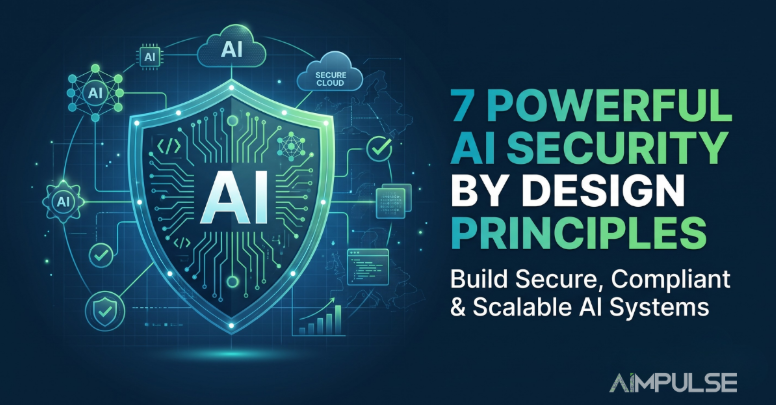
7 Powerful AI Security by Design Principles Every Business Should Know
Artificial intelligence is transforming industries at an unprecedented pace. Yet as organizations race to adopt AI, many overlook one critical factor—security. AI Security by Design is no longer a luxury or an afterthought; it’s a business requirement.
From financial institutions in Europe to logistics companies across the GCC, organizations are deploying AI to automate operations, improve customer experiences, and make faster decisions. However, every AI model introduces new attack surfaces, privacy risks, and compliance challenges.
Rather than adding security after deployment, leading organizations build security into every stage of AI development. This proactive approach not only protects sensitive data but also supports compliance with regulations such as the EU AI Act, GDPR, and emerging AI governance frameworks across the Middle East.
In this guide, you’ll learn the seven essential principles of AI Security by Design, practical implementation steps, and how businesses can develop AI systems that are secure, scalable, and ready for the future.
Table of Contents
- What Is AI Security by Design?
- Why AI Security Matters More Than Ever
- The 7 Principles of AI Security by Design
- Common AI Security Mistakes
- How to Implement AI Security by Design
- The AImpulse Secure AI Framework
- Frequently Asked Questions
- Conclusion
What Is AI Security by Design?
7 Powerful AI Security by Design Principles Every Business Should Know
7 Powerful AI Security by Design Principles Every Business Should Know
AI Security by Design is the practice of embedding security, privacy, governance, and compliance into every stage of the AI lifecycle—from data collection and model development to deployment and continuous monitoring.
Unlike traditional security approaches that focus on protecting infrastructure after implementation, AI Security by Design ensures that AI systems are resilient from day one.
This approach includes:
- Secure data collection
- Access control
- Model integrity
- Threat modeling
- Continuous monitoring
- Regulatory compliance
- Responsible AI governance
Organizations adopting this methodology significantly reduce operational risks while increasing trust among customers and stakeholders.
Why AI Security Matters More Than Ever
7 Powerful AI Security by Design Principles Every Business Should Know
7 Powerful AI Security by Design Principles Every Business Should Know
7 Powerful AI Security by Design Principles Every Business Should Know
AI systems process enormous amounts of sensitive information. Customer records, financial transactions, healthcare data, and proprietary business information are all valuable targets for attackers.
Without proper safeguards, organizations face risks such as:
- Data leakage
- Model theft
- Prompt injection attacks
- Adversarial manipulation
- Regulatory penalties
- Reputational damage
As AI regulations continue evolving across Europe and the GCC, organizations that prioritize security early gain a competitive advantage while reducing long-term compliance costs.
The 7 Principles of AI Security by Design
1. Secure Data from Day One
AI models are only as secure as the data they learn from.
Organizations should implement:
- Data classification
- Encryption
- Access controls
- Data lineage
- Secure storage
2. Verify Data Quality
Poor-quality or manipulated data produces unreliable AI.
Implement:
- Data validation
- Anomaly detection
- Dataset versioning
- Continuous auditing
3. Build Explainable Models
Explainable AI helps organizations understand why models make decisions.
Benefits include:
- Regulatory compliance
- Increased customer trust
- Easier debugging
- Better governance
4. Protect AI Models
AI models themselves are valuable intellectual property.
Protect them through:
- API authentication
- Rate limiting
- Encryption
- Secure model storage
- Access logging
5. Secure the AI Development Lifecycle
Security shouldn’t start after deployment.
Integrate security into:
- Planning
- Development
- Testing
- Deployment
- Monitoring
Following a Secure AI Development Lifecycle significantly reduces vulnerabilities before production.
Building AI Securely from the Start
If you’re evaluating AI opportunities within your organization, security should be part of the conversation from day one—not after deployment.
At AImpulse, we help businesses design AI solutions that are secure, compliant, and scalable from the very beginning.
6. Continuously Monitor AI Systems
AI models evolve over time.
Monitor for:
- Model drift
- Performance degradation
- Suspicious behavior
- Unauthorized access
- Compliance violations
Continuous monitoring enables organizations to respond quickly before small issues become major incidents.
7. Build Responsible AI Governance
Technology alone isn’t enough.
Organizations need clear governance covering:
- Roles and responsibilities
- Risk assessments
- Human oversight
- Documentation
- Compliance reviews
Responsible governance ensures AI remains aligned with business objectives and regulatory expectations.
7 Powerful AI Security by Design Principles Every Business Should Know
7 Powerful AI Security by Design Principles Every Business Should Know
7 Powerful AI Security by Design Principles Every Business Should Know
7 Powerful AI Security by Design Principles Every Business Should Know
7 Powerful AI Security by Design Principles Every Business Should Know
7 Powerful AI Security by Design Principles Every Business Should Know
7 Powerful AI Security by Design Principles Every Business Should Know
7 Powerful AI Security by Design Principles Every Business Should Know
7 Powerful AI Security by Design Principles Every Business Should Know
7 Powerful AI Security by Design Principles Every Business Should Know
7 Powerful AI Security by Design Principles Every Business Should Know
7 Powerful AI Security by Design Principles Every Business Should Know
7 Powerful AI Security by Design Principles Every Business Should Know
7 Powerful AI Security by Design Principles Every Business Should Know
7 Powerful AI Security by Design Principles Every Business Should Know
Common AI Security Mistakes
Many AI initiatives fail because security isn’t integrated early enough.
Avoid these common mistakes:
- Treating AI security as an IT-only responsibility
- Ignoring model monitoring
- Using unverified datasets
- Forgetting access control
- Overlooking AI governance
- Delaying compliance planning
- Deploying models without security testing
How to Implement AI Security by Design
Organizations can begin with five practical steps.
1. Assess AI Risks
Identify systems handling sensitive information.
2. Create Security Policies
Establish governance before development begins.
3. Secure the Development Pipeline
Integrate automated security testing into your CI/CD pipeline.
4. Pilot Secure AI Projects
Validate one high-impact use case before scaling.
5. Continuously Improve
Monitor, optimize, and adapt security controls as regulations evolve.
The AImpulse Secure AI Framework
Our approach follows five practical phases.
Discover
Understand business objectives and risks.
↓
Protect
Implement governance, compliance, and security architecture.
↓
Build
Develop secure, explainable AI systems.
↓
Monitor
Continuously evaluate performance and threats.
↓
Scale
Expand AI capabilities while maintaining compliance and resilience.
This framework enables organizations to innovate confidently without compromising security.
Frequently Asked Questions
What is AI Security by Design?
AI Security by Design is the practice of integrating security, privacy, and compliance into every phase of AI development instead of adding protections after deployment.
Why is AI Security by Design important?
It helps organizations reduce cyber risks, protect sensitive data, comply with regulations, and build trustworthy AI systems.
How can companies implement AI Security by Design?
Organizations should start by assessing risks, establishing governance, securing development pipelines, monitoring AI models continuously, and adopting responsible AI practices.
Is AI Security by Design required for compliance?
While implementation varies by jurisdiction, security-by-design principles strongly support compliance with regulations such as GDPR, the EU AI Act, and emerging AI governance frameworks across the MENA region.
Conclusion
As AI becomes a core part of modern business, security can no longer be an afterthought. Organizations that embrace AI Security by Design are better equipped to protect their data, comply with evolving regulations, and build AI systems that customers and stakeholders can trust.
Whether you’re deploying your first AI solution or scaling enterprise-wide automation, integrating security from the beginning reduces risk and creates a stronger foundation for long-term innovation.
At AImpulse, we help organizations across Europe and the MENA region design, develop, and deploy AI systems that are secure, compliant, and built to scale.
Ready to build AI with confidence?
- Explore our AI Services.
- Book a Discovery Session.
- Follow AImpulse on LinkedIn for insights on AI security, product development, and digital transformation.
Artificial intelligence is transforming industries at an unprecedented pace. Yet as organizations race to adopt AI, many overlook one critical factor—security. AI Security by Design is no longer a luxury or an afterthought; it’s a business requirement.
From financial institutions in Europe to logistics companies across the GCC, organizations are deploying AI to automate operations, improve customer experiences, and make faster decisions. However, every AI model introduces new attack surfaces, privacy risks, and compliance challenges.
Rather than adding security after deployment, leading organizations build security into every stage of AI development. This proactive approach not only protects sensitive data but also supports compliance with regulations such as the EU AI Act, GDPR, and emerging AI governance frameworks across the Middle East.
In this guide, you’ll learn the seven essential principles of AI Security by Design, practical implementation steps, and how businesses can develop AI systems that are secure, scalable, and ready for the future.
Table of Contents
- What Is AI Security by Design?
- Why AI Security Matters More Than Ever
- The 7 Principles of AI Security by Design
- Common AI Security Mistakes
- How to Implement AI Security by Design
- The AImpulse Secure AI Framework
- Frequently Asked Questions
- Conclusion
What Is AI Security by Design?
AI Security by Design is the practice of embedding security, privacy, governance, and compliance into every stage of the AI lifecycle—from data collection and model development to deployment and continuous monitoring.
Unlike traditional security approaches that focus on protecting infrastructure after implementation, AI Security by Design ensures that AI systems are resilient from day one.
This approach includes:
- Secure data collection
- Access control
- Model integrity
- Threat modeling
- Continuous monitoring
- Regulatory compliance
- Responsible AI governance
Organizations adopting this methodology significantly reduce operational risks while increasing trust among customers and stakeholders.
Why AI Security Matters More Than Ever
AI systems process enormous amounts of sensitive information. Customer records, financial transactions, healthcare data, and proprietary business information are all valuable targets for attackers.
Without proper safeguards, organizations face risks such as:
- Data leakage
- Model theft
- Prompt injection attacks
- Adversarial manipulation
- Regulatory penalties
- Reputational damage
As AI regulations continue evolving across Europe and the GCC, organizations that prioritize security early gain a competitive advantage while reducing long-term compliance costs.
The 7 Principles of AI Security by Design
1. Secure Data from Day One
AI models are only as secure as the data they learn from.
Organizations should implement:
- Data classification
- Encryption
- Access controls
- Data lineage
- Secure storage
2. Verify Data Quality
Poor-quality or manipulated data produces unreliable AI.
Implement:
- Data validation
- Anomaly detection
- Dataset versioning
- Continuous auditing
3. Build Explainable Models
Explainable AI helps organizations understand why models make decisions.
Benefits include:
- Regulatory compliance
- Increased customer trust
- Easier debugging
- Better governance
4. Protect AI Models
AI models themselves are valuable intellectual property.
Protect them through:
- API authentication
- Rate limiting
- Encryption
- Secure model storage
- Access logging
5. Secure the AI Development Lifecycle
Security shouldn’t start after deployment.
Integrate security into:
- Planning
- Development
- Testing
- Deployment
- Monitoring
Following a Secure AI Development Lifecycle significantly reduces vulnerabilities before production.
Building AI Securely from the Start
If you’re evaluating AI opportunities within your organization, security should be part of the conversation from day one—not after deployment.
At AImpulse, we help businesses design AI solutions that are secure, compliant, and scalable from the very beginning.
6. Continuously Monitor AI Systems
AI models evolve over time.
Monitor for:
- Model drift
- Performance degradation
- Suspicious behavior
- Unauthorized access
- Compliance violations
Continuous monitoring enables organizations to respond quickly before small issues become major incidents.
7. Build Responsible AI Governance
Technology alone isn’t enough.
Organizations need clear governance covering:
- Roles and responsibilities
- Risk assessments
- Human oversight
- Documentation
- Compliance reviews
Responsible governance ensures AI remains aligned with business objectives and regulatory expectations.
Common AI Security Mistakes
Many AI initiatives fail because security isn’t integrated early enough.
Avoid these common mistakes:
- Treating AI security as an IT-only responsibility
- Ignoring model monitoring
- Using unverified datasets
- Forgetting access control
- Overlooking AI governance
- Delaying compliance planning
- Deploying models without security testing
How to Implement AI Security by Design
Organizations can begin with five practical steps.
1. Assess AI Risks
Identify systems handling sensitive information.
2. Create Security Policies
Establish governance before development begins.
3. Secure the Development Pipeline
Integrate automated security testing into your CI/CD pipeline.
4. Pilot Secure AI Projects
Validate one high-impact use case before scaling.
5. Continuously Improve
Monitor, optimize, and adapt security controls as regulations evolve.
The AImpulse Secure AI Framework
Our approach follows five practical phases.
Discover
Understand business objectives and risks.
↓
Protect
Implement governance, compliance, and security architecture.
↓
Build
Develop secure, explainable AI systems.
↓
Monitor
Continuously evaluate performance and threats.
↓
Scale
Expand AI capabilities while maintaining compliance and resilience.
This framework enables organizations to innovate confidently without compromising security.
Frequently Asked Questions
What is AI Security by Design?
AI Security by Design is the practice of integrating security, privacy, and compliance into every phase of AI development instead of adding protections after deployment.
Why is AI Security by Design important?
It helps organizations reduce cyber risks, protect sensitive data, comply with regulations, and build trustworthy AI systems.
How can companies implement AI Security by Design?
Organizations should start by assessing risks, establishing governance, securing development pipelines, monitoring AI models continuously, and adopting responsible AI practices.
Is AI Security by Design required for compliance?
While implementation varies by jurisdiction, security-by-design principles strongly support compliance with regulations such as GDPR, the EU AI Act, and emerging AI governance frameworks across the MENA region.
Conclusion
As AI becomes a core part of modern business, security can no longer be an afterthought. Organizations that embrace AI Security by Design are better equipped to protect their data, comply with evolving regulations, and build AI systems that customers and stakeholders can trust.
Whether you’re deploying your first AI solution or scaling enterprise-wide automation, integrating security from the beginning reduces risk and creates a stronger foundation for long-term innovation.
At AImpulse, we help organizations across Europe and the MENA region design, develop, and deploy AI systems that are secure, compliant, and built to scale.
Ready to build AI with confidence?
- Explore our AI Services.
- Book a Discovery Session.
- Follow AImpulse on LinkedIn for insights on AI security, product development, and digital transformation.
External Resources