
AI-Powered SaaS Platforms for Enterprise Growth
AI-powered SaaS platforms are no longer an experiment on the innovation team’s roadmap — they are becoming the default operating model for enterprises that want to grow faster without growing headcount at the same rate. For CTOs, founders, and digital transformation leaders across Europe, the question has shifted from “should we adopt AI SaaS?” to “how do we build or buy the right one, and how fast?”
This article breaks down what AI-powered SaaS platforms actually are, why European enterprises are adopting them at record speed, the seven benefits driving that adoption, the mistakes that derail most projects, and a practical framework for getting it right.
Table of Contents
- What are AI-powered SaaS platforms?
- Why enterprises are adopting AI SaaS faster than ever
- 7 powerful benefits of AI-powered SaaS platforms
- Common mistakes
- The AImpulse SaaS Framework
- How AImpulse helps
- FAQ
What are AI-powered SaaS platforms?
AI-powered SaaS platforms are cloud-native software products that embed machine learning, natural language processing, or predictive analytics directly into their core workflows — rather than bolting AI on as a side feature. Unlike traditional SaaS, which automates fixed rules, AI SaaS solutions learn from data, adapt to usage patterns, and improve decision-making over time.
A traditional CRM tells a sales team what happened last quarter. An AI-powered SaaS platform predicts which accounts are likely to churn next quarter and recommends the next best action — automatically, at scale, and continuously improving as more data flows through the system.
Why enterprises are adopting AI SaaS faster than ever
Three forces are converging across Europe. First, cloud infrastructure from providers like AWS, Microsoft Azure, and Google Cloud has made enterprise-grade AI compute accessible without massive capital investment. Second, talent and tooling for AI software development have matured — open-source frameworks, managed ML pipelines, and CNCF-backed container standards have lowered the barrier to production-grade deployment. Third, regulatory clarity is improving: the EU AI Act and GDPR now give enterprises a defined compliance perimeter to build within, rather than an open question mark.
The result is that enterprise digital transformation budgets are shifting from “explore AI” pilots toward funded, revenue-linked AI SaaS solutions with measurable ROI targets.
7 Powerful Benefits of AI-Powered SaaS Platforms
1. Faster, Data-Driven Decision Making
AI-powered SaaS platforms process far more signal than a human team can manually review. A logistics enterprise using an AI-powered routing platform can re-optimize thousands of delivery routes in real time based on traffic, weather, and fuel cost data — a decision that would take a planning team days to recalculate manually.
2. Meaningful Cost Reduction Through Automation
AI business automation removes repetitive, rules-based work from invoice processing, customer support triage, and compliance checks. Enterprises typically see the greatest early savings in back-office functions where volume is high and variance is low, freeing skilled staff for higher-value work.
3. Elastic, Cloud-Native Scalability
Because AI-powered SaaS platforms are built on cloud-native SaaS architecture, they scale horizontally with demand. A retail platform can handle a tenfold traffic spike during a seasonal sales event without re-architecting the system, using container orchestration and auto-scaling infrastructure common to modern DevOps practice.
4. Personalization at Enterprise Scale
Machine learning models can tailor product recommendations, pricing, or content to individual users across millions of accounts simultaneously — something static rule engines cannot realistically achieve without constant manual tuning.
5. Stronger Predictive Insight and Risk Management
Predictive models embedded in enterprise AI software can flag equipment failure risk, credit risk, or customer churn weeks before it becomes visible in standard reporting, giving leadership teams a genuine early-warning system.
6. Seamless Integration Through APIs
Modern AI SaaS solutions are built API-first, allowing them to plug into existing ERP, CRM, and data warehouse systems rather than replacing them. This dramatically shortens time-to-value compared to rip-and-replace transformation projects.
7. Continuous Improvement Without Manual Rebuilds
Because the underlying models retrain on new data, AI-powered SaaS platforms improve in production — accuracy and relevance increase over time without a full software rebuild, unlike static legacy applications.
If you’re evaluating an AI-powered SaaS idea, start with one business problem instead of ten. At AImpulse Studio, we help founders validate, build and launch scalable SaaS products — one well-defined use case at a time.
Common Mistakes When Building AI SaaS Platforms
Most failed AI SaaS initiatives share the same root causes:
- Trying to solve too many problems in v1, instead of proving value with one narrow, high-impact use case.
- Treating AI as a bolt-on feature rather than designing the data architecture and MLOps pipeline from day one.
- Ignoring compliance early, particularly GDPR and the EU AI Act’s risk-tiering requirements, which is far more expensive to retrofit than to design for upfront.
- Underestimating data quality work, which typically consumes far more engineering time than model development itself.
- Skipping a validation phase, building a full platform before confirming a paying enterprise customer actually needs it.
The AImpulse SaaS Framework
MID ARTICLE IMAGE
AImpulse guides enterprise and founder teams through a structured six-stage framework for building AI-powered SaaS platforms that are commercially viable and technically sound from day one:
- Discover — Identify the specific business problem, target user, and measurable success metric before writing a line of code.
- Validate — Test the concept with real prospective customers and a lightweight prototype to confirm willingness to pay.
- Architect — Design a cloud-native, API-first system architecture, including data pipelines, security, and compliance boundaries.
- Develop — Build the MVP using modern AI software development practices, CI/CD, and DevOps automation.
- Launch — Deploy to production with monitoring, feedback loops, and a go-to-market plan aligned to the target region.
- Scale — Expand infrastructure, retrain models on production data, and extend the platform into adjacent use cases.
How AImpulse Helps
AI-Powered SaaS Platforms for Enterprise Growth
AI-Powered SaaS Platforms for Enterprise Growth
AI-Powered SaaS Platforms for Enterprise Growth
AI-Powered SaaS Platforms for Enterprise Growth
AI-Powered SaaS Platforms for Enterprise Growth
AI-Powered SaaS Platforms for Enterprise Growth
AI-Powered SaaS Platforms for Enterprise Growth
AI-Powered SaaS Platforms for Enterprise Growth
AI-Powered SaaS Platforms for Enterprise Growth
AImpulse works with founders, CTOs, and enterprise innovation teams across Europe to turn AI SaaS concepts into production-grade products. Our team combines enterprise digital transformation experience with hands-on AI software development, covering everything from cloud-native architecture and API design to compliance-aware deployment under GDPR and the EU AI Act. Rather than generic consulting, AImpulse Studio works alongside your team through each stage of the framework above — from the first validation conversation to a scaled, revenue-generating platform.
Frequently Asked Questions
What are AI-powered SaaS platforms? AI-powered SaaS platforms are cloud-based software products that use machine learning or predictive analytics as a core part of their functionality, rather than as an add-on. They continuously learn from data to improve recommendations, automation, and decision-making for enterprise users.
Why are AI-powered SaaS platforms important? They let enterprises automate complex decisions, reduce operational costs, and personalize services at scale without linear increases in headcount. For European enterprises facing tight margins and talent shortages, this efficiency gain is becoming a genuine competitive differentiator.
How do companies build AI-powered SaaS products? Successful teams start by validating one specific business problem, then design a cloud-native, API-first architecture before development begins. Frameworks like AImpulse’s Discover-Validate-Architect-Develop-Launch-Scale model help structure this process and reduce costly rebuilds later.
What industries benefit most? Logistics, financial services, retail, healthcare, and manufacturing see some of the strongest early returns, thanks to high transaction volumes, rich operational data, and clear predictive use cases such as demand forecasting, fraud detection, and risk scoring.
How can AImpulse help? AImpulse Studio helps founders and enterprise teams validate, architect, build, and launch AI-powered SaaS platforms, combining technical development with compliance guidance for GDPR and the EU AI Act, so products are commercially viable and audit-ready from day one. You can check our work from here.
Conclusion
AI-powered SaaS platforms are moving from competitive advantage to competitive necessity for enterprises across Europe. The organizations winning this shift aren’t the ones with the biggest AI budgets — they’re the ones that start with a single, well-validated business problem, build on solid cloud-native architecture, and scale deliberately using a repeatable framework.
If you’re ready to explore what an AI-powered SaaS platform could look like for your business, talk to AImpulse Studio or follow AImpulse on LinkedIn for ongoing insights on enterprise AI and SaaS development.
Suggested Internal Links
- AImpulse Studio overview page — https://aimpulse.io/aimpulse-studio/
- A services/solutions page on AI software development or MVP validation
- A case study or portfolio page showing a previously built SaaS/AI product
Suggested External Links (Authoritative Sources)
AI-powered SaaS platforms are no longer an experiment on the innovation team’s roadmap — they are becoming the default operating model for enterprises that want to grow faster without growing headcount at the same rate. For CTOs, founders, and digital transformation leaders across Europe, the question has shifted from “should we adopt AI SaaS?” to “how do we build or buy the right one, and how fast?”
This article breaks down what AI-powered SaaS platforms actually are, why European enterprises are adopting them at record speed, the seven benefits driving that adoption, the mistakes that derail most projects, and a practical framework for getting it right.
Table of Contents
- What are AI-powered SaaS platforms?
- Why enterprises are adopting AI SaaS faster than ever
- 7 powerful benefits of AI-powered SaaS platforms
- Common mistakes
- The AImpulse SaaS Framework
- How AImpulse helps
- FAQ
What are AI-powered SaaS platforms?
AI-powered SaaS platforms are cloud-native software products that embed machine learning, natural language processing, or predictive analytics directly into their core workflows — rather than bolting AI on as a side feature. Unlike traditional SaaS, which automates fixed rules, AI SaaS solutions learn from data, adapt to usage patterns, and improve decision-making over time.
A traditional CRM tells a sales team what happened last quarter. An AI-powered SaaS platform predicts which accounts are likely to churn next quarter and recommends the next best action — automatically, at scale, and continuously improving as more data flows through the system.
Why enterprises are adopting AI SaaS faster than ever
Three forces are converging across Europe. First, cloud infrastructure from providers like AWS, Microsoft Azure, and Google Cloud has made enterprise-grade AI compute accessible without massive capital investment. Second, talent and tooling for AI software development have matured — open-source frameworks, managed ML pipelines, and CNCF-backed container standards have lowered the barrier to production-grade deployment. Third, regulatory clarity is improving: the EU AI Act and GDPR now give enterprises a defined compliance perimeter to build within, rather than an open question mark.
The result is that enterprise digital transformation budgets are shifting from “explore AI” pilots toward funded, revenue-linked AI SaaS solutions with measurable ROI targets.
7 Powerful Benefits of AI-Powered SaaS Platforms
1. Faster, Data-Driven Decision Making
AI-powered SaaS platforms process far more signal than a human team can manually review. A logistics enterprise using an AI-powered routing platform can re-optimize thousands of delivery routes in real time based on traffic, weather, and fuel cost data — a decision that would take a planning team days to recalculate manually.
2. Meaningful Cost Reduction Through Automation
AI business automation removes repetitive, rules-based work from invoice processing, customer support triage, and compliance checks. Enterprises typically see the greatest early savings in back-office functions where volume is high and variance is low, freeing skilled staff for higher-value work.
3. Elastic, Cloud-Native Scalability
Because AI-powered SaaS platforms are built on cloud-native SaaS architecture, they scale horizontally with demand. A retail platform can handle a tenfold traffic spike during a seasonal sales event without re-architecting the system, using container orchestration and auto-scaling infrastructure common to modern DevOps practice.
4. Personalization at Enterprise Scale
Machine learning models can tailor product recommendations, pricing, or content to individual users across millions of accounts simultaneously — something static rule engines cannot realistically achieve without constant manual tuning.
5. Stronger Predictive Insight and Risk Management
Predictive models embedded in enterprise AI software can flag equipment failure risk, credit risk, or customer churn weeks before it becomes visible in standard reporting, giving leadership teams a genuine early-warning system.
6. Seamless Integration Through APIs
Modern AI SaaS solutions are built API-first, allowing them to plug into existing ERP, CRM, and data warehouse systems rather than replacing them. This dramatically shortens time-to-value compared to rip-and-replace transformation projects.
7. Continuous Improvement Without Manual Rebuilds
Because the underlying models retrain on new data, AI-powered SaaS platforms improve in production — accuracy and relevance increase over time without a full software rebuild, unlike static legacy applications.
If you’re evaluating an AI-powered SaaS idea, start with one business problem instead of ten. At AImpulse Studio, we help founders validate, build and launch scalable SaaS products — one well-defined use case at a time.
Common Mistakes When Building AI SaaS Platforms
Most failed AI SaaS initiatives share the same root causes:
- Trying to solve too many problems in v1, instead of proving value with one narrow, high-impact use case.
- Treating AI as a bolt-on feature rather than designing the data architecture and MLOps pipeline from day one.
- Ignoring compliance early, particularly GDPR and the EU AI Act’s risk-tiering requirements, which is far more expensive to retrofit than to design for upfront.
- Underestimating data quality work, which typically consumes far more engineering time than model development itself.
- Skipping a validation phase, building a full platform before confirming a paying enterprise customer actually needs it.
The AImpulse SaaS Framework
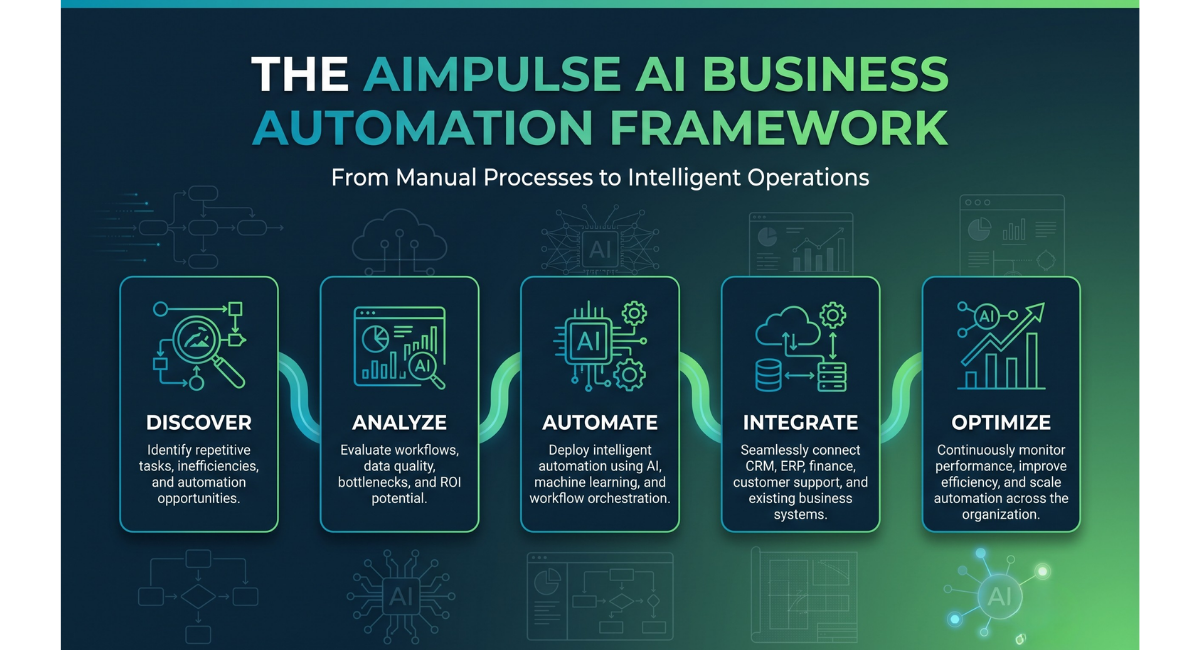
AImpulse guides enterprise and founder teams through a structured six-stage framework for building AI-powered SaaS platforms that are commercially viable and technically sound from day one:
- Discover — Identify the specific business problem, target user, and measurable success metric before writing a line of code.
- Validate — Test the concept with real prospective customers and a lightweight prototype to confirm willingness to pay.
- Architect — Design a cloud-native, API-first system architecture, including data pipelines, security, and compliance boundaries.
- Develop — Build the MVP using modern AI software development practices, CI/CD, and DevOps automation.
- Launch — Deploy to production with monitoring, feedback loops, and a go-to-market plan aligned to the target region.
- Scale — Expand infrastructure, retrain models on production data, and extend the platform into adjacent use cases.
How AImpulse Helps
AImpulse works with founders, CTOs, and enterprise innovation teams across Europe to turn AI SaaS concepts into production-grade products. Our team combines enterprise digital transformation experience with hands-on AI software development, covering everything from cloud-native architecture and API design to compliance-aware deployment under GDPR and the EU AI Act. Rather than generic consulting, AImpulse Studio works alongside your team through each stage of the framework above — from the first validation conversation to a scaled, revenue-generating platform.
Frequently Asked Questions
What are AI-powered SaaS platforms? AI-powered SaaS platforms are cloud-based software products that use machine learning or predictive analytics as a core part of their functionality, rather than as an add-on. They continuously learn from data to improve recommendations, automation, and decision-making for enterprise users.
Why are AI-powered SaaS platforms important? They let enterprises automate complex decisions, reduce operational costs, and personalize services at scale without linear increases in headcount. For European enterprises facing tight margins and talent shortages, this efficiency gain is becoming a genuine competitive differentiator.
How do companies build AI-powered SaaS products? Successful teams start by validating one specific business problem, then design a cloud-native, API-first architecture before development begins. Frameworks like AImpulse’s Discover-Validate-Architect-Develop-Launch-Scale model help structure this process and reduce costly rebuilds later.
What industries benefit most? Logistics, financial services, retail, healthcare, and manufacturing see some of the strongest early returns, thanks to high transaction volumes, rich operational data, and clear predictive use cases such as demand forecasting, fraud detection, and risk scoring.
How can AImpulse help? AImpulse Studio helps founders and enterprise teams validate, architect, build, and launch AI-powered SaaS platforms, combining technical development with compliance guidance for GDPR and the EU AI Act, so products are commercially viable and audit-ready from day one. You can check our work from here.
Conclusion
AI-powered SaaS platforms are moving from competitive advantage to competitive necessity for enterprises across Europe. The organizations winning this shift aren’t the ones with the biggest AI budgets — they’re the ones that start with a single, well-validated business problem, build on solid cloud-native architecture, and scale deliberately using a repeatable framework.
If you’re ready to explore what an AI-powered SaaS platform could look like for your business, talk to AImpulse Studio or follow AImpulse on LinkedIn for ongoing insights on enterprise AI and SaaS development.