
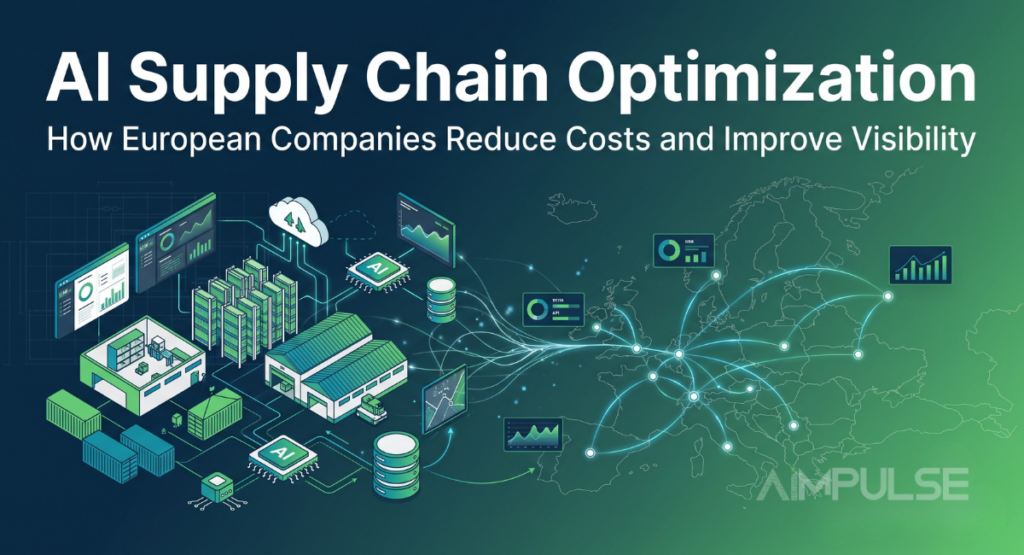
AI Supply Chain Optimization: How European Companies Reduce Costs and Improve Visibility
AI supply chain optimization has moved from a logistics buzzword to a measurable competitive advantage for European manufacturers, retailers, and distributors. Rising energy costs, cross-border regulatory complexity, and persistent demand volatility have pushed supply chain leaders to look beyond spreadsheets and static planning tools toward systems that can forecast, adapt, and self-correct in near real time.
This article explains what AI supply chain optimization actually involves, the specific challenges facing European supply chains today, seven proven ways AI is being applied across logistics operations, and a practical framework for piloting and scaling it responsibly.
Table of Contents
- What is AI supply chain optimization?
- Challenges in European supply chains
- 7 ways AI improves supply chains
- Common mistakes
- The AImpulse Supply Chain Framework
- FAQ
What is AI Supply Chain Optimization?
AI supply chain optimization is the use of machine learning, predictive analytics, and automation to improve how goods are forecasted, produced, stored, moved, and delivered. Rather than relying on static rules and historical averages, AI-driven systems continuously learn from live data — order volumes, weather, supplier performance, transport conditions — and adjust recommendations accordingly.
In practice, this spans everything from AI logistics platforms that reroute shipments around disruptions, to supply chain AI models that predict which products will sell out next month before a human planner would notice the trend.
Challenges in European Supply Chains
European supply chains face a distinct set of pressures that make AI adoption particularly valuable:
- Cross-border complexity. Goods moving across multiple EU member states face varying customs processes, VAT rules, and transport regulations.
- Energy and fuel cost volatility. Fluctuating energy prices directly affect warehousing and transport costs, making static cost models unreliable.
- Sustainability reporting requirements. Regulations such as the EU Corporate Sustainability Reporting Directive (CSRD) require detailed emissions and supplier data that manual tracking struggles to keep current.
- Labor shortages in logistics. Warehousing and haulage sectors across Europe continue to face recruitment gaps, increasing pressure on automation.
- Demand unpredictability. Geopolitical disruption and shifting consumer behavior have made traditional demand forecasting models far less reliable than they once were.
These pressures are precisely where AI supply chain optimization delivers the clearest, most measurable return.
7 Ways AI Improves Supply Chains
1. Demand Forecasting
AI-driven demand forecasting analyzes historical sales, seasonality, promotions, and external signals like weather or local events to predict demand with far greater accuracy than traditional statistical models. A European grocery retailer, for example, can reduce stockouts on fast-moving items while avoiding overstock on slower ones.
2. Inventory Optimization
Supply chain AI continuously recalculates optimal stock levels across multiple warehouses, balancing carrying costs against service-level targets. This reduces both excess inventory and the lost sales that come from running out of high-demand SKUs.
3. Warehouse Automation
Warehouse AI powers robotics, computer vision for quality checks, and intelligent slotting systems that determine where items should be stored for the fastest possible picking. This is one of the most visible and fastest-scaling applications of AI logistics today.
4. Predictive Maintenance
Sensors on conveyor systems, forklifts, and manufacturing equipment feed data into predictive models that flag likely failures before they cause downtime — shifting maintenance from a fixed schedule to a data-driven, condition-based approach.
5. Route Optimization
Predictive logistics platforms calculate optimal delivery routes in real time, factoring in traffic, weather, fuel cost, and delivery windows. This reduces fuel consumption and improves on-time delivery rates simultaneously.
6. Compliance Monitoring
AI systems can automatically flag shipments or suppliers that fall outside regulatory or sustainability thresholds, helping supply chain teams stay ahead of frameworks like CSRD and cross-border customs requirements without manual audit cycles.
7. Supplier Risk Analysis
Machine learning models can assess supplier financial health, geopolitical exposure, and historical delivery reliability, giving procurement teams early warning of risk before a disruption actually reaches the production line.
Many organizations start with one supply chain AI pilot before scaling across logistics operations. AImpulse helps define the right use case. Talk to AImpulse about where to start also you can read more on AI logistics and powerful ways to transform supply chains here.
Common Mistakes in AI Supply Chain Projects
Supply chain AI initiatives frequently underdeliver for a small set of recurring reasons:
- Starting with the whole network instead of one lane or warehouse, making it impossible to isolate what’s actually working.
- Poor data quality across systems, since AI forecasting is only as reliable as the underlying ERP, WMS, and transport data feeding it.
- Ignoring change management, rolling out AI recommendations to planners and warehouse staff without training or trust-building.
- Treating AI as a one-time project rather than a continuously retrained system that needs ongoing monitoring.
- Skipping ROI measurement, making it difficult to justify scaling the pilot to additional sites or regions.
The AImpulse Supply Chain Framework
MID ARTICLE IMAGE
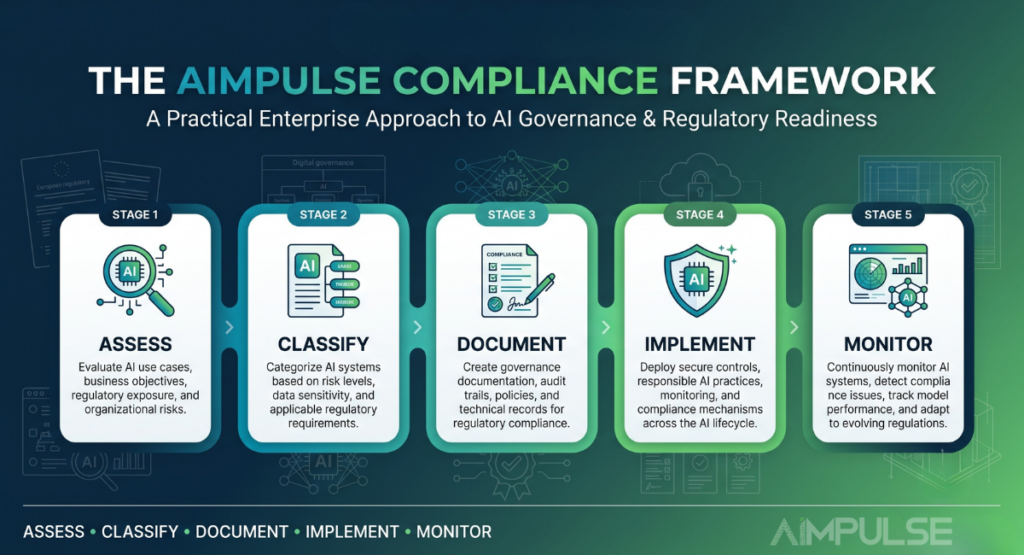
AImpulse guides logistics and operations teams through a structured five-stage framework for adopting AI supply chain optimization responsibly:
- Analyze — Assess current supply chain data quality, systems, and the specific bottleneck worth solving first.
- Predict — Build and validate forecasting or predictive models against real historical performance.
- Optimize — Translate predictions into concrete recommendations for inventory, routing, or maintenance decisions.
- Automate — Integrate recommendations directly into planning, warehouse, or transport systems via APIs.
- Scale — Extend the proven pilot across additional warehouses, regions, or product lines.
Frequently Asked Questions
What is AI supply chain optimization? AI supply chain optimization uses machine learning and predictive analytics to improve forecasting, inventory management, warehousing, and logistics decisions. It replaces static, rule-based planning with systems that continuously learn from live operational data to reduce costs and improve accuracy.
How does AI improve demand forecasting? AI models analyze historical sales, seasonality, promotions, and external factors like weather to predict future demand more accurately than traditional statistical methods. This helps companies avoid both stockouts and costly overstock across their product range.
What are the biggest challenges for European supply chains? European supply chains face cross-border regulatory complexity, energy cost volatility, sustainability reporting requirements like CSRD, labor shortages in logistics, and increasingly unpredictable demand patterns driven by geopolitical and economic shifts.
Which supply chain functions benefit most from AI? Demand forecasting, inventory optimization, warehouse automation, predictive maintenance, and route optimization typically show the fastest, most measurable returns, since they rely on high-volume, structured operational data well suited to machine learning models.
How can AImpulse help with AI supply chain projects? AImpulse helps companies identify the right starting use case, build and validate predictive models, and integrate them into existing logistics systems. Using a structured five-stage framework, AImpulse reduces pilot risk while creating a clear path to scale across the wider network.
Conclusion
AI Supply Chain Optimization: How European Companies Reduce Costs and Improve Visibility
AI Supply Chain Optimization: How European Companies Reduce Costs and Improve Visibility
AI Supply Chain Optimization: How European Companies Reduce Costs and Improve Visibility
AI Supply Chain Optimization: How European Companies Reduce Costs and Improve Visibility
AI Supply Chain Optimization: How European Companies Reduce Costs and Improve Visibility
AI Supply Chain Optimization: How European Companies Reduce Costs and Improve Visibility
AI Supply Chain Optimization: How European Companies Reduce Costs and Improve Visibility
AI Supply Chain Optimization: How European Companies Reduce Costs and Improve Visibility
AI Supply Chain Optimization: How European Companies Reduce Costs and Improve Visibility
AI Supply Chain Optimization: How European Companies Reduce Costs and Improve Visibility
AI Supply Chain Optimization: How European Companies Reduce Costs and Improve Visibility
AI Supply Chain Optimization: How European Companies Reduce Costs and Improve Visibility
AI Supply Chain Optimization: How European Companies Reduce Costs and Improve Visibility
AI Supply Chain Optimization: How European Companies Reduce Costs and Improve Visibility
AI Supply Chain Optimization: How European Companies Reduce Costs and Improve Visibility
AI Supply Chain Optimization: How European Companies Reduce Costs and Improve Visibility
AI Supply Chain Optimization: How European Companies Reduce Costs and Improve Visibility
AI Supply Chain Optimization: How European Companies Reduce Costs and Improve Visibility
AI Supply Chain Optimization: How European Companies Reduce Costs and Improve Visibility
AI supply chain optimization is no longer reserved for the largest global logistics networks — European manufacturers, retailers, and distributors of every size are finding measurable gains in cost, accuracy, and visibility by starting small and scaling deliberately. The companies seeing the strongest results aren’t the ones automating everything at once; they’re the ones validating a single high-impact use case, proving the ROI, and expanding from there.
If your organization is exploring where AI could reduce cost and improve visibility across your supply chain, talk to AImpulse or follow AImpulse on LinkedIn for ongoing insights on AI in logistics and operations.
Suggested Internal Links
- AImpulse article on AI-Powered SaaS Platforms (related architecture and automation topic)
- AImpulse article on Cloud-Native Architecture Explained (infrastructure underpinning AI logistics systems)
- AImpulse article/page on AI Business Automation
Learn More From These Extra Resources
- World Economic Forum — supply chain and logistics research
- McKinsey & Company — AI in supply chain management insights
AI supply chain optimization has moved from a logistics buzzword to a measurable competitive advantage for European manufacturers, retailers, and distributors. Rising energy costs, cross-border regulatory complexity, and persistent demand volatility have pushed supply chain leaders to look beyond spreadsheets and static planning tools toward systems that can forecast, adapt, and self-correct in near real time.
This article explains what AI supply chain optimization actually involves, the specific challenges facing European supply chains today, seven proven ways AI is being applied across logistics operations, and a practical framework for piloting and scaling it responsibly.
Table of Contents
- What is AI supply chain optimization?
- Challenges in European supply chains
- 7 ways AI improves supply chains
- Common mistakes
- The AImpulse Supply Chain Framework
- FAQ
What is AI Supply Chain Optimization?
AI supply chain optimization is the use of machine learning, predictive analytics, and automation to improve how goods are forecasted, produced, stored, moved, and delivered. Rather than relying on static rules and historical averages, AI-driven systems continuously learn from live data — order volumes, weather, supplier performance, transport conditions — and adjust recommendations accordingly.
In practice, this spans everything from AI logistics platforms that reroute shipments around disruptions, to supply chain AI models that predict which products will sell out next month before a human planner would notice the trend.
Challenges in European Supply Chains
European supply chains face a distinct set of pressures that make AI adoption particularly valuable:
- Cross-border complexity. Goods moving across multiple EU member states face varying customs processes, VAT rules, and transport regulations.
- Energy and fuel cost volatility. Fluctuating energy prices directly affect warehousing and transport costs, making static cost models unreliable.
- Sustainability reporting requirements. Regulations such as the EU Corporate Sustainability Reporting Directive (CSRD) require detailed emissions and supplier data that manual tracking struggles to keep current.
- Labor shortages in logistics. Warehousing and haulage sectors across Europe continue to face recruitment gaps, increasing pressure on automation.
- Demand unpredictability. Geopolitical disruption and shifting consumer behavior have made traditional demand forecasting models far less reliable than they once were.
These pressures are precisely where AI supply chain optimization delivers the clearest, most measurable return.
7 Ways AI Improves Supply Chains
1. Demand Forecasting
AI-driven demand forecasting analyzes historical sales, seasonality, promotions, and external signals like weather or local events to predict demand with far greater accuracy than traditional statistical models. A European grocery retailer, for example, can reduce stockouts on fast-moving items while avoiding overstock on slower ones.
2. Inventory Optimization
Supply chain AI continuously recalculates optimal stock levels across multiple warehouses, balancing carrying costs against service-level targets. This reduces both excess inventory and the lost sales that come from running out of high-demand SKUs.
3. Warehouse Automation
Warehouse AI powers robotics, computer vision for quality checks, and intelligent slotting systems that determine where items should be stored for the fastest possible picking. This is one of the most visible and fastest-scaling applications of AI logistics today.
4. Predictive Maintenance
Sensors on conveyor systems, forklifts, and manufacturing equipment feed data into predictive models that flag likely failures before they cause downtime — shifting maintenance from a fixed schedule to a data-driven, condition-based approach.
5. Route Optimization
Predictive logistics platforms calculate optimal delivery routes in real time, factoring in traffic, weather, fuel cost, and delivery windows. This reduces fuel consumption and improves on-time delivery rates simultaneously.
6. Compliance Monitoring
AI systems can automatically flag shipments or suppliers that fall outside regulatory or sustainability thresholds, helping supply chain teams stay ahead of frameworks like CSRD and cross-border customs requirements without manual audit cycles.
7. Supplier Risk Analysis
Machine learning models can assess supplier financial health, geopolitical exposure, and historical delivery reliability, giving procurement teams early warning of risk before a disruption actually reaches the production line.
Many organizations start with one supply chain AI pilot before scaling across logistics operations. AImpulse helps define the right use case. Talk to AImpulse about where to start also you can read more on AI logistics and powerful ways to transform supply chains here.
Common Mistakes in AI Supply Chain Projects
Supply chain AI initiatives frequently underdeliver for a small set of recurring reasons:
- Starting with the whole network instead of one lane or warehouse, making it impossible to isolate what’s actually working.
- Poor data quality across systems, since AI forecasting is only as reliable as the underlying ERP, WMS, and transport data feeding it.
- Ignoring change management, rolling out AI recommendations to planners and warehouse staff without training or trust-building.
- Treating AI as a one-time project rather than a continuously retrained system that needs ongoing monitoring.
- Skipping ROI measurement, making it difficult to justify scaling the pilot to additional sites or regions.
The AImpulse Supply Chain Framework
AImpulse guides logistics and operations teams through a structured five-stage framework for adopting AI supply chain optimization responsibly:
- Analyze — Assess current supply chain data quality, systems, and the specific bottleneck worth solving first.
- Predict — Build and validate forecasting or predictive models against real historical performance.
- Optimize — Translate predictions into concrete recommendations for inventory, routing, or maintenance decisions.
- Automate — Integrate recommendations directly into planning, warehouse, or transport systems via APIs.
- Scale — Extend the proven pilot across additional warehouses, regions, or product lines.
Frequently Asked Questions
What is AI supply chain optimization? AI supply chain optimization uses machine learning and predictive analytics to improve forecasting, inventory management, warehousing, and logistics decisions. It replaces static, rule-based planning with systems that continuously learn from live operational data to reduce costs and improve accuracy.
How does AI improve demand forecasting? AI models analyze historical sales, seasonality, promotions, and external factors like weather to predict future demand more accurately than traditional statistical methods. This helps companies avoid both stockouts and costly overstock across their product range.
What are the biggest challenges for European supply chains? European supply chains face cross-border regulatory complexity, energy cost volatility, sustainability reporting requirements like CSRD, labor shortages in logistics, and increasingly unpredictable demand patterns driven by geopolitical and economic shifts.
Which supply chain functions benefit most from AI? Demand forecasting, inventory optimization, warehouse automation, predictive maintenance, and route optimization typically show the fastest, most measurable returns, since they rely on high-volume, structured operational data well suited to machine learning models.
How can AImpulse help with AI supply chain projects? AImpulse helps companies identify the right starting use case, build and validate predictive models, and integrate them into existing logistics systems. Using a structured five-stage framework, AImpulse reduces pilot risk while creating a clear path to scale across the wider network.
Conclusion
AI supply chain optimization is no longer reserved for the largest global logistics networks — European manufacturers, retailers, and distributors of every size are finding measurable gains in cost, accuracy, and visibility by starting small and scaling deliberately. The companies seeing the strongest results aren’t the ones automating everything at once; they’re the ones validating a single high-impact use case, proving the ROI, and expanding from there.
If your organization is exploring where AI could reduce cost and improve visibility across your supply chain, talk to AImpulse or follow AImpulse on LinkedIn for ongoing insights on AI in logistics and operations.
Suggested Internal Links
- AImpulse article on AI-Powered SaaS Platforms (related architecture and automation topic)
- AImpulse article on Cloud-Native Architecture Explained (infrastructure underpinning AI logistics systems)
- AImpulse article/page on AI Business Automation