
Introduction
AI in governance MENA is rapidly becoming a boardroom priority.
Across the UAE, Saudi Arabia, Qatar, and the wider GCC, organizations are investing heavily in artificial intelligence. Yet many companies focus on AI implementation while overlooking governance, risk management, and compliance.
As AI adoption accelerates, businesses need clear frameworks to ensure transparency, accountability, security, and regulatory alignment.
This guide explores the essential principles of AI governance in the Middle East and how organizations can prepare for responsible AI at scale.
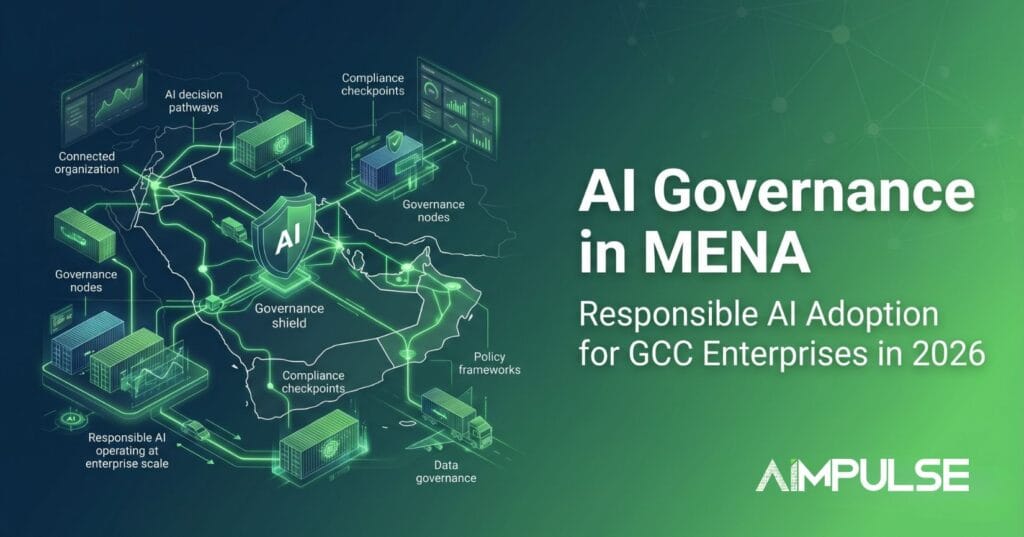
What Is AI Governance?
AI governance refers to the policies, processes, and controls that guide how artificial intelligence systems are designed, deployed, monitored, and managed.
A strong AI in governance MENA framework ensures:
- Ethical use of AI
- Regulatory compliance
- Data protection
- Model transparency
- Risk mitigation
Without governance, organizations expose themselves to legal, operational, and reputational risks..
Why AI in Governance MENA Matters
Governments across the region are investing billions in AI initiatives.
Examples include:
- Saudi Vision 2030
- UAE National AI Strategy
- Smart Dubai initiatives
As adoption grows, organizations must demonstrate that AI systems are:
- Fair
- Explainable
- Secure
- Auditable
AI governance helps organizations build trust with customers, regulators, and stakeholders.
7 Essential AI Governance Principles
1. Establish Executive Accountability
AI ownership cannot sit only within IT.
Executive leadership must define:
- AI policies
- Risk tolerance
- Approval processes
- Governance responsibilities
Successful organizations create AI governance committees that include business, technology, legal, and compliance teams.
2. Prioritize Data Governance
AI is only as reliable as the data behind it.
Organizations should establish:
- Data quality standards
- Data lineage tracking
- Access controls
- Retention policies
Poor data governance leads to inaccurate AI outcomes and compliance issues.
3. Build Explainable AI Systems
Stakeholders must understand how AI decisions are made.
This is particularly important in:
- Banking
- Insurance
- Healthcare
- Public services
Explainability improves trust and reduces regulatory concerns.
4. Implement AI Risk Management
AI risks include:
- Bias
- Hallucinations
- Security vulnerabilities
- Data leakage
- Model drift
Regular risk assessments should become part of every AI initiative.
5. Ensure Security by Design
AI systems should follow security best practices from day one.
Organizations should implement:
- Access controls
- Encryption
- Monitoring
- Incident response plans
This aligns closely with secure development practices and DevSecOps principles.
6. Monitor Models Continuously
AI governance does not end at deployment.
Models should be monitored for:
- Accuracy
- Performance
- Bias
- Compliance
Continuous monitoring helps organizations identify issues before they impact operations.
7. Create Clear AI Policies
Every organization should define:
- Acceptable AI usage
- Employee responsibilities
- Data handling rules
- Third-party AI tool policies
Clear policies reduce risk and improve adoption.
Why This Matters for Logistics, Government, and Enterprise Organizations
AI governance is particularly important for:
Logistics
- Route optimization
- Demand forecasting
- Compliance automation
Government
- Citizen services
- Smart city initiatives
- Public-sector automation
Enterprise
- Customer service automation
- Predictive analytics
- Operational efficiency
Organizations with governance frameworks scale AI faster and more safely.
How to Implement AI Governance in the Middle East
Follow this practical roadmap:
Step 1
Assess existing AI initiatives.
Step 2
Identify compliance and risk requirements.
Step 3
Create governance policies.
Step 4
Establish oversight committees.
Step 5
Implement monitoring and reporting.
Thinking About AI for Governance?
If your organization is exploring AI opportunities but lacks a governance framework, start with a governance assessment before scaling AI initiatives. Most successful AI programs begin with strong foundations.
Common AI in Governance Mistakes
Avoid these common pitfalls:
- Treating governance as an afterthought
- Ignoring explainability
- Overlooking security
- Lack of executive ownership
- No ongoing monitoring
These issues often become major obstacles during AI scaling efforts.
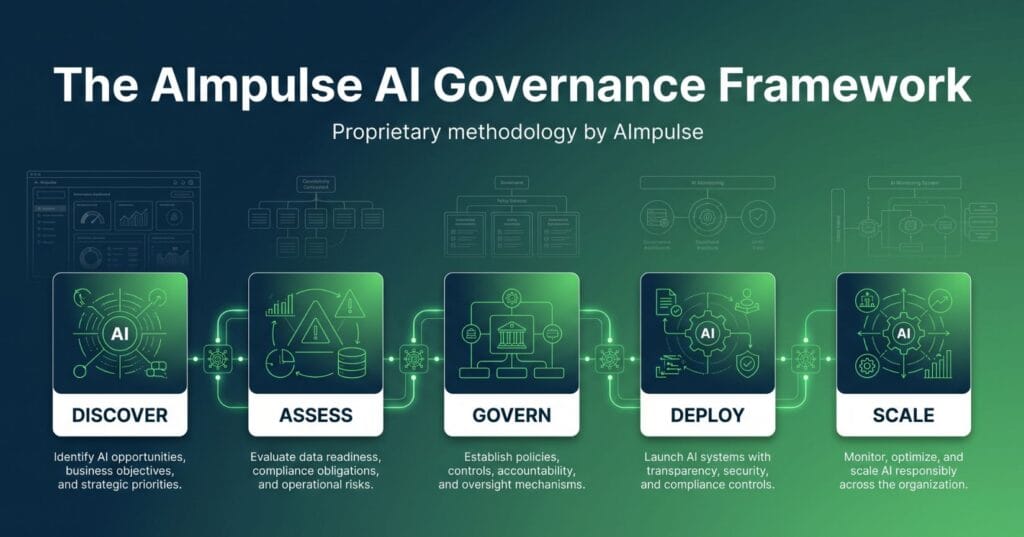
The AImpulse AI in Governance MENA Framework
Discover → Assess → Govern → Deploy → Scale
Discover
Identify opportunities and risks.
Assess
Evaluate compliance, security, and readiness.
Govern
Create policies and accountability structures.
Deploy
Implement responsible AI solutions.
Scale
Monitor performance and continuously improve.
This framework helps organizations move from experimentation to enterprise-scale AI adoption.
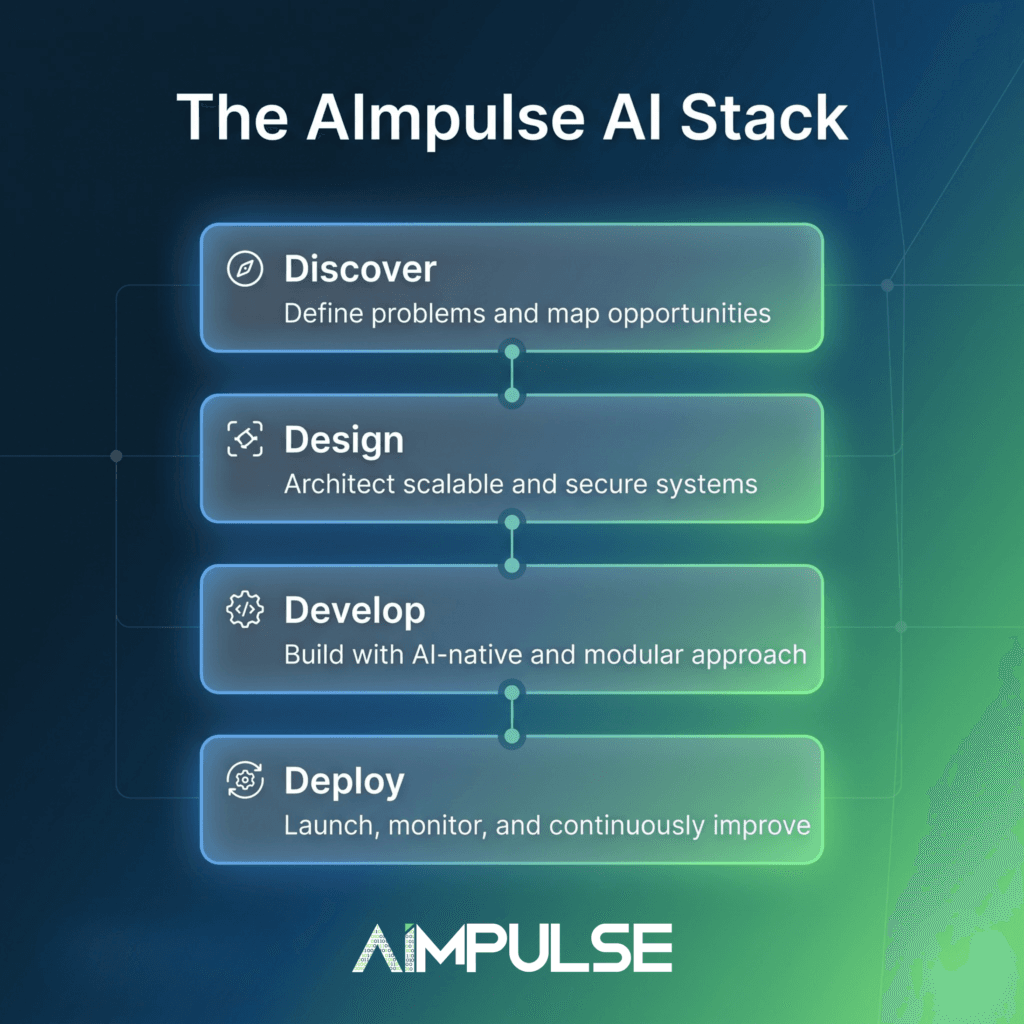
How AImpulse Helps
We help organizations across the GCC and MENA region:
- Develop AI governance frameworks
- Build responsible AI strategies
- Conduct AI readiness assessments
- Implement secure AI solutions
- Scale AI responsibly
Our approach combines innovation, compliance, and business value to ensure sustainable AI transformation.
If you’re exploring AI adoption across industries, you may also find our guide on AI in logistics in Europe useful for understanding the broader landscape.
Frequently Asked Questions
What is AI in governance?
AI governance is the framework of policies, processes, and controls used to manage AI systems responsibly and securely.
Why is AI in governance MENA important?
AI governance helps organizations reduce risk, improve transparency, ensure compliance, and build trust in AI systems.
How can companies implement AI in governance?
Organizations should establish policies, define accountability, assess risks, and continuously monitor AI systems.
Which industries benefit most from AI governance?
Logistics, healthcare, finance, government, and large enterprises benefit significantly from AI governance frameworks.
Conclusion
AI governance in MENA is no longer optional.
As organizations across the GCC accelerate AI adoption, governance becomes the foundation for sustainable growth, compliance, and trust.
Companies that establish governance frameworks today will be better positioned to scale AI safely, confidently, and competitively in the years ahead.
Ready to build a responsible AI strategy? Connect with AImpulse to explore how governance can accelerate your AI transformation journey.
👉 This is typically how we help teams validate AI opportunities before scaling. You can also explore how we build scalable solutions on our AI development services page.
Curious how these trends apply to your business?
👉 Let’s explore your use case together — no pressure, just clarity.