
Introduction:
AI in logistics Europe is no longer optional—it’s becoming the backbone of modern supply chains. Across Germany, the Netherlands, and Finland, logistics companies are facing rising regulatory pressure, operational complexity, and customer expectations.
At the same time, margins are tightening.
This is where AI is changing the game.
From automating customs documentation to enabling GDPR-compliant tracking, AI in logistics Europe is helping companies move faster while staying compliant.
In this guide, we break down how.
What is AI in logistics Europe?
AI in logistics Europe refers to using machine learning, automation, and data systems to optimize supply chains while meeting strict European regulations like GDPR and cross-border compliance rules.
It includes:
- Automated document processing
- Smart route optimization
- Predictive logistics planning
- Privacy-first data handling
Unlike traditional logistics systems, AI-driven logistics adapts in real time.
Why AI in logistics Europe matters
European logistics is uniquely complex.
Companies must balance:
- GDPR compliance
- Cross-border regulations
- Operational efficiency
- Customer transparency
Manual systems can’t keep up.
That’s why AI in logistics Europe delivers:
- Faster processing times
- Reduced compliance risks
- Lower operational costs
- Better decision-making
👉 The shift is clear:
Companies are moving from reactive logistics to predictive, AI-driven logistics.
5 Powerful Use Cases of AI in Logistics Europe
1. AI-Powered Customs Automation
Manual customs documentation slows everything down.
AI can:
- Read invoices automatically
- Validate documents
- Flag missing compliance data
This reduces delays and human errors.
2. GDPR-Compliant Tracking Systems
Tracking involves sensitive customer data.
AI helps:
- Encrypt logistics data
- Control access levels
- Create audit trails
👉 This ensures full GDPR compliance while maintaining real-time visibility.
3. Smart Route Optimization (Privacy-First)
Traditional routing uses centralized data.
AI introduces federated learning, which:
- Optimizes routes without sharing raw data
- Protects fleet and location data
- Improves efficiency across regions
4. Warehouse Compliance with Computer Vision
AI-powered cameras can:
- Detect safety violations
- Monitor handling of goods
- Ensure compliance standards
This reduces risks and improves workplace safety.
5. Predictive Maintenance
AI predicts when vehicles or systems may fail.
Benefits include:
- Reduced downtime
- Lower repair costs
- Increased reliability
How to implement AI in logistics Europe (Step-by-Step)
Step 1: Identify compliance bottlenecks
Where are delays happening?
- Customs
- Documentation
- Data handling
Step 2: Start with one use case
Don’t overcomplicate.
👉 Most companies begin with:
- Document automation
- Tracking optimization
Step 3: Build privacy-first architecture
Ensure:
- GDPR compliance
- Secure data pipelines
- Auditability
Step 4: Launch a pilot project
Test before scaling.
👉 This is where many companies gain clarity.
If you’re unsure where to start, most teams begin with a small AI pilot tailored to one logistics challenge — this is exactly how we help validate opportunities before scaling.
Step 5: Scale gradually
Expand into:
- Full supply chain optimization
- Routing
- Predictive analytics
If you’re exploring AI adoption across industries, you may also find our guide on AI trends in Europe useful for understanding the broader landscape.
Common mistakes to avoid
❌ Ignoring data quality
→ AI fails without clean data
❌ Treating AI as a one-time project
→ AI needs continuous improvement
❌ Overlooking compliance early
→ Leads to expensive fixes later
❌ Building in isolation
→ Legal + operations must be involved
The AImpulse AI Approach
Exploring AI trends in Europe 2026 will inform our strategy moving forward.
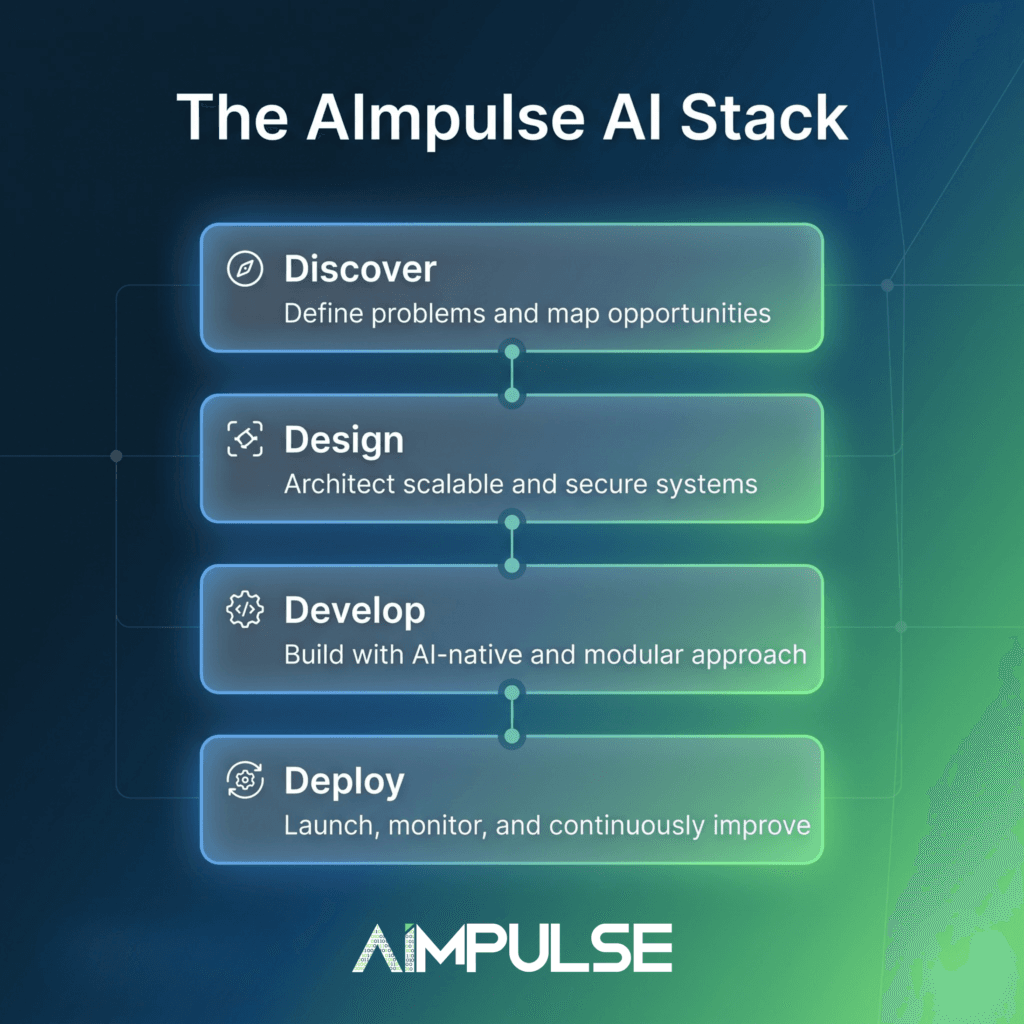
At AImpulse, we follow a simple but powerful model:
🧠 AImpulse AI Stack
Discover → Identify high-impact AI opportunities
Design → Build compliant, explainable architecture
Develop → Rapid AI implementation using modern tools
Deploy & Scale → Monitor, improve, and expand
👉 This ensures every solution is:
- Scalable
- Secure
- Regulation-ready
If you’re unsure where to start, most companies begin with a small AI pilot focused on a single use case.
👉 This is typically how we help teams validate AI opportunities before scaling. You can also explore how we build scalable solutions on our AI development services page.
How AImpulse helps
We help logistics companies across Europe:
- Automate compliance processes
- Build GDPR-compliant AI systems
- Integrate AI into existing logistics platforms
We don’t just optimize logistics.
👉 We make it future-proof.
Frequently Asked Questions
What is AI in logistics Europe?
- AI in logistics Europe refers to using artificial intelligence to optimize supply chains while ensuring compliance with European regulations like GDPR.
How does AI help logistics compliance?
- AI automates documentation, encrypts sensitive data, and ensures real-time compliance monitoring across logistics operations.
Is AI in logistics GDPR compliant?
- Yes—when implemented correctly. AI systems can be designed with privacy-first principles like encryption, anonymization, and audit tracking.
How can companies adopt AI in logistics Europe?
Companies should start with a small pilot, focus on one use case, ensure data readiness, and scale gradually while maintaining compliance.
Conclusion
AI in logistics Europe is redefining how supply chains operate.
👉 It’s not just about speed anymore.
👉 It’s about compliance, intelligence, and scalability.
Companies that adopt AI early—and correctly—will lead the next generation of logistics.
Curious how these trends apply to your business?
👉 Let’s explore your use case together — no pressure, just clarity.
External Resource
- EU GDPR Overview: https://gdpr.eu/what-is-gdpr/