
Johdanto
Artificial intelligence is rapidly reshaping the logistics industry across the Middle East and North Africa. As supply chains become more complex and customer expectations continue to rise, businesses are turning to AI in logistics MENA to improve efficiency, reduce costs, and strengthen compliance.
From smart warehouses in Saudi Arabia to AI-powered route optimization in the UAE, logistics leaders are embracing digital transformation to stay competitive. The organizations that adopt AI today will be better positioned to scale tomorrow.
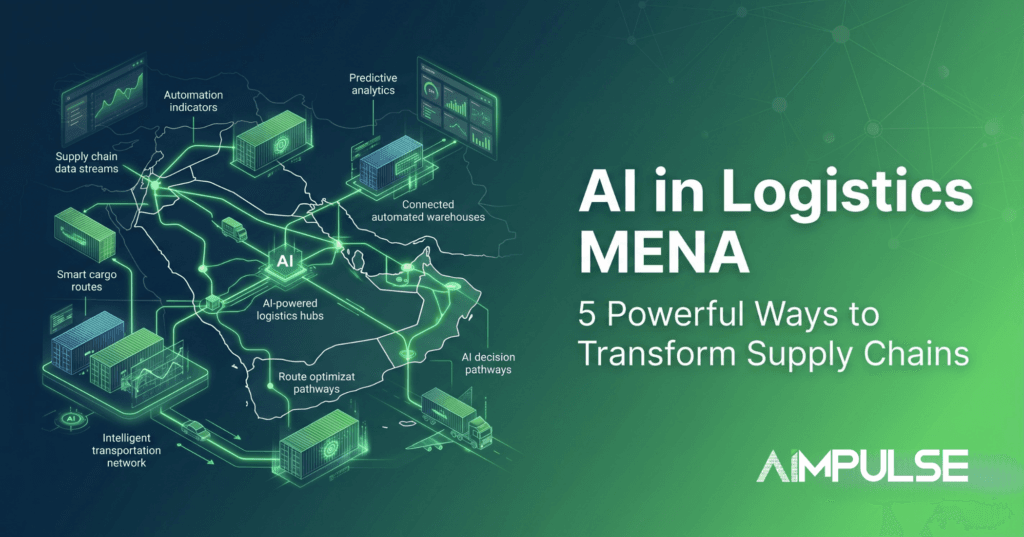
What is AI in Logistics?
AI in logistics MENA refers to the use of artificial intelligence technologies such as machine learning, predictive analytics, computer vision, and automation to optimize supply chain operations.
Modern AI logistics solutions help businesses:
- Predict demand more accurately
- Optimize transportation routes
- Automate warehouse operations
- Improve inventory management
- Enhance regulatory compliance
Unlike traditional logistics systems, AI continuously learns from data and improves performance over time.
As a result, logistics companies can make faster decisions while reducing operational risks.
Why Logistics Companies Across MENA Are Investing in AI?
The logistics sector is experiencing significant growth across the GCC and wider MENA region.
Several factors are accelerating investment in AI supply chain optimization:
Growing E-commerce Demand
Online shopping continues to expand across Saudi Arabia, the UAE, Qatar, and Egypt. Logistics providers must handle higher order volumes while maintaining delivery speed and accuracy.
National Digital Transformation Initiatives
Programs such as Saudi Vision 2030 and the UAE Digital Economy Strategy are encouraging organizations to adopt advanced technologies.
Increasing Compliance Requirements
Cross-border trade requires organizations to meet customs, security, and data protection requirements. AI helps streamline these processes while reducing manual effort.
Rising Operational Costs
Fuel, labor, and infrastructure expenses continue to rise. AI helps organizations identify efficiencies that reduce overall logistics costs.
5 Powerful Ways AI is Transforming Logistics in MENA
1. Route Optimization
One of the most valuable applications of AI is intelligent route planning.
Using real-time traffic data, weather conditions, and delivery schedules, AI route optimization GCC solutions can:
- Reduce fuel consumption
- Improve delivery times
- Lower transportation costs
- Increase fleet productivity
For companies managing large fleets across multiple countries, even small efficiency gains can generate substantial savings.
2. Predictive Maintenance
Unexpected vehicle breakdowns create delays and increase operating costs.
AI-powered predictive maintenance analyzes vehicle performance data to identify potential issues before failures occur.
Hyödyt sisältävät:
- Lyhyempi seisokkiaika
- Matalammat korjauskustannukset
- Improved fleet reliability
- Enhanced safety
This approach allows logistics providers to move from reactive maintenance to proactive asset management.
3. Warehouse Automation
Modern warehouses are becoming increasingly intelligent.
Smart warehouse solutions Middle East companies are adopting include:
- Computer vision systems
- Automated inventory tracking
- Robotics-assisted picking
- AI-powered demand forecasting
These technologies improve operational accuracy while reducing manual workloads.
Warehouses can process more orders with fewer errors and greater efficiency.
4. Compliance and Customs Processing
Cross-border logistics involves extensive documentation and regulatory requirements.
AI logistics compliance Saudi Arabia initiatives are helping organizations automate:
- Customs declarations
- Invoice validation
- Shipment classification
- Risk assessment processes
AI systems can quickly identify missing information, compliance issues, and documentation errors before shipments are delayed.
This reduces administrative costs and improves customer satisfaction.
5. Demand Forecasting
Accurate forecasting is essential for efficient supply chain planning.
AI-powered supply chain management UAE solutions analyze:
- Historical sales data
- Seasonal trends
- Market conditions
- Consumer behavior patterns
These insights help organizations:
- Optimize inventory levels
- Reduce stock shortages
- Minimize overstocking
- Improve procurement planning
Companies gain better visibility into future demand and can make more informed decisions.
How to Implement AI in Logistics in the Middle East
Many organizations assume AI transformation requires a massive investment.
In reality, successful implementation often begins with a focused pilot project.
Step 1: Identify a High-Impact Use Case
Start with a specific challenge such as:
- Reititysoptimointi
- Kysynnän ennustaminen
- Warehouse automation
- Compliance monitoring
Step 2: Assess Data Readiness
AI depends on quality data.
Review:
- Data availability
- Tiedon laatu
- Data security
- System integration requirements
Step 3: Launch a Pilot Project
Validate business value before scaling.
Mittaus
- Cost savings
- Efficiency gains
- Käyttöönotto
- Sijoitetun pääoman tuotto
Step 4: Scale Strategically
Expand successful pilots across additional departments and operational areas.
Thinking About AI for Logistics?
If you’re evaluating AI opportunities within your logistics operation, start with a focused pilot project. Most successful AI transformations begin with one high-impact use case before scaling across the organization.
Yleiset virheet, joita tulee välttää
Organizations often encounter challenges when implementing AI.
The most common AI implementation mistakes include:
Trying to Automate Everything at Once
Large-scale projects create unnecessary complexity and risk.
Tietojen laadun huomiotta jättäminen
Poor-quality data produces poor-quality outcomes.
Lack of Executive Sponsorship
AI initiatives require leadership support and organizational alignment.
Overlooking Compliance Requirements
Regulatory considerations should be incorporated from the beginning.
Focusing on Technology Instead of Business Outcomes
Successful projects solve real operational problems rather than deploying technology for its own sake.
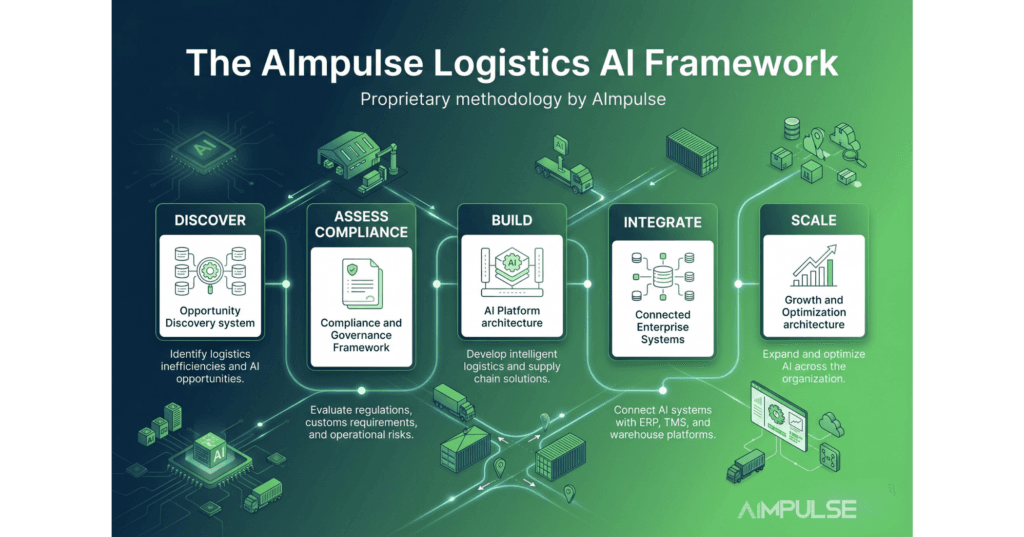
The AImpulse AI Logistics Framework
At AImpulse, we help organizations implement AI through a structured methodology.
The AImpulse Logistics AI Framework
Löytää
Identify operational challenges and opportunities.
Assess Compliance
Review regulatory requirements and risk factors.
Build
Develop AI models and automation workflows.
Integrate
Connect solutions with existing systems and processes.
Scale
Optimize performance and expand across operations.
This framework helps ensure every AI initiative delivers measurable business value while remaining secure and compliant.
Miten AImpulse Auttaa
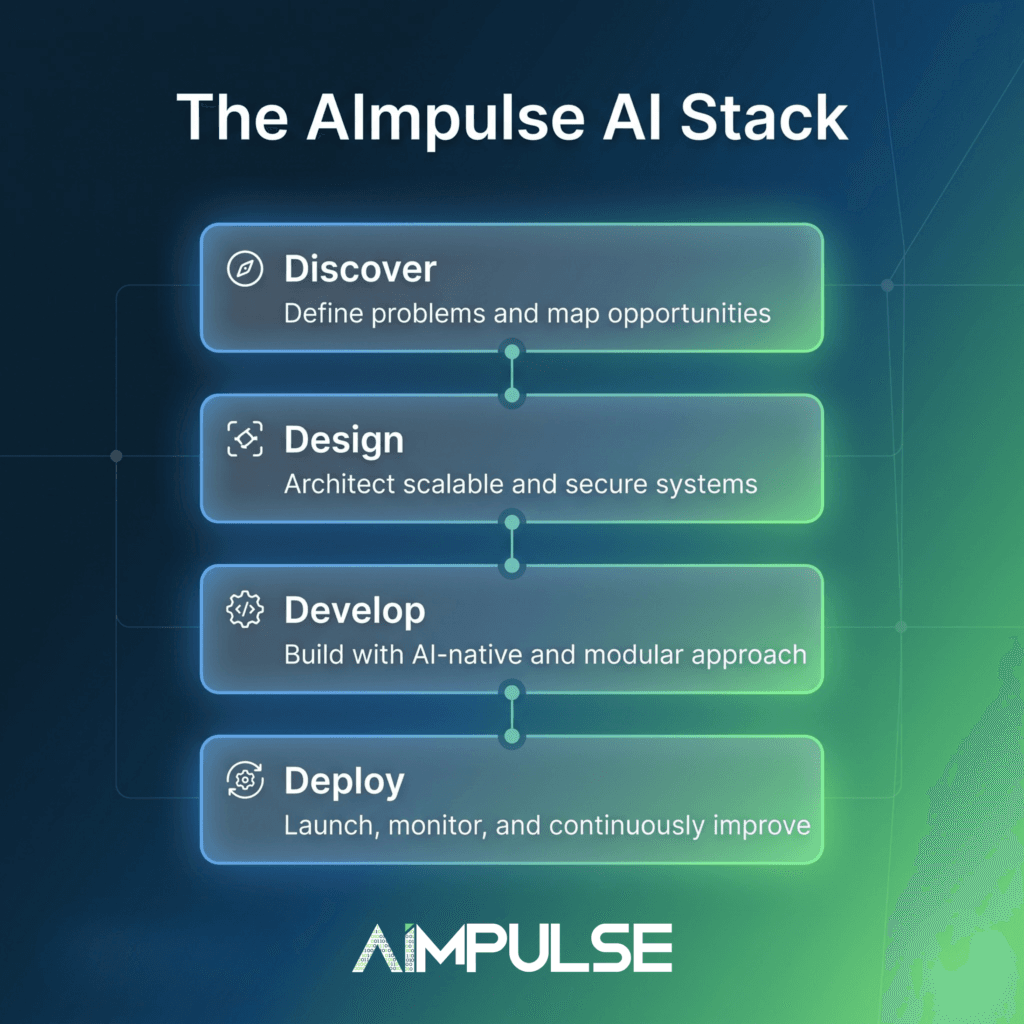
As a trusted AI development company UAE and digital transformation partner, AImpulse supports logistics organizations throughout their AI journey.
Our services include:
- AI strategy consulting
- Supply chain optimization solutions
- Custom AI development
- Compliance-focused AI implementation
- Data analytics and forecasting systems
We help businesses deploy practical AI solutions that generate real operational improvements.
We don’t just build technology.
We build solutions that solve business challenges.
Jos tutustut tekoälyn käyttöön eri teollisuudenaloilla, saatat löytää myös oppaamme aiheesta AI in logistics in Europe hyödyllinen laajemman kokonaiskuvan ymmärtämiseen.
Usein kysytyt kysymykset
What is AI in logistics?
AI in logistics uses machine learning, automation, and predictive analytics to improve supply chain operations, routing, warehousing, and compliance processes.
How is AI used in supply chains?
AI helps forecast demand, optimize transportation routes, automate warehouse operations, and improve inventory management.
Why is AI important for logistics companies in the Middle East?
AI helps logistics companies reduce costs, improve efficiency, meet regulatory requirements, and manage increasing demand across the GCC and wider MENA region.
How can logistics companies start using AI?
Most companies begin with a pilot project focused on route optimization, forecasting, warehouse automation, or compliance monitoring before expanding AI across their operations.
Johtopäätös
The future of logistics across the MENA region is intelligent, automated, and data-driven.
Organizations adopting AI in logistics MENA today are improving operational efficiency, strengthening compliance, and creating competitive advantages that will shape the next decade of growth.
Whether your goal is optimizing routes, automating warehouses, improving forecasting, or streamlining compliance, the right AI strategy can deliver measurable results.
Ready to explore what AI could do for your logistics operation?
Connect with the AImpulse team and discover where your biggest opportunities lie.
👉 Tällä tavalla autamme yleensä tiimejä validoimaan tekoälymahdollisuuksia ennen skaalausta. Voit myös tutustua siihen, miten rakennamme skaalautuvia ratkaisuja osoitteessa Tekoälyn kehityspalvelut.
Mietitkö, miten nämä trendit vaikuttavat yritykseesi?
👉 Tutustutaan yhdessä käyttötapaukseesi – ei paineita, vain selkeyttä.